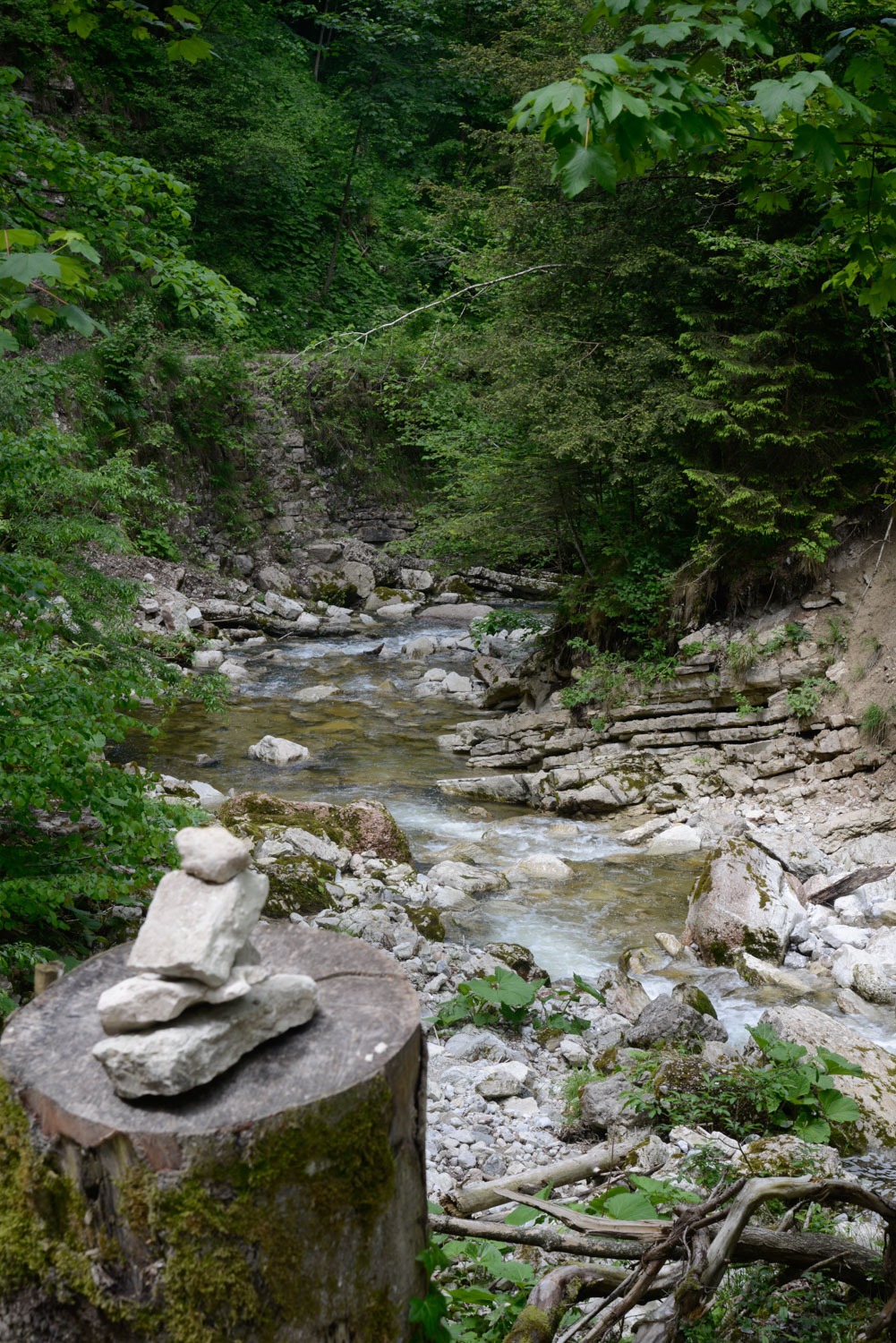

Prehistoric and Geology Trail in Elsbethen near Salzburg
As early as 1965, the first nature trail was established through the approximately 3-kilometer-long gorge.
In 1987, our Glasenbach Gorge—through which the Klausbach River flows—was designated a „Protected Landscape Area“ due to its beautiful rock formations, abundance of fossils, and rich vegetation.
Since 2016, work has been underway in phases to redesign this natural gem. Rest areas, Kneipp fountains, and balance courses have been created, and now the Prehistoric and Geology Trail has also been completed. This trail was designed in cooperation with the sculpture class at HTL Hallein and is being unveiled for the first time.
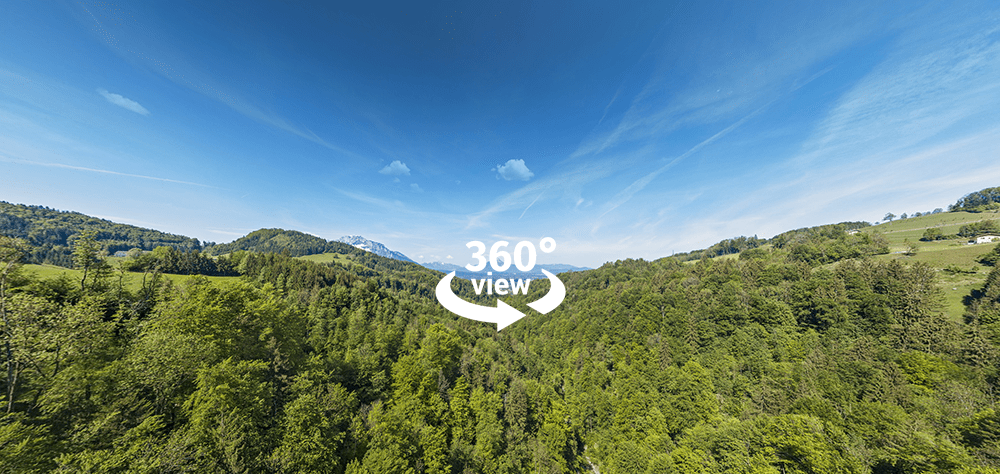
360° View of the Glasenbach Gorge
You'll be surprised at all there is to discover:
Ichthyosaur
Toothache
Mammoth
Saber-toothed tiger
Giant Dragonfly
Ammonites and Cephalopods
Prehistoric Crab
Neanderthals
Prehistoric Bird
Dinosaur Nest
Lady fern
All the Facts About the Glasenbach Gorge
The Glasenbach Gorge
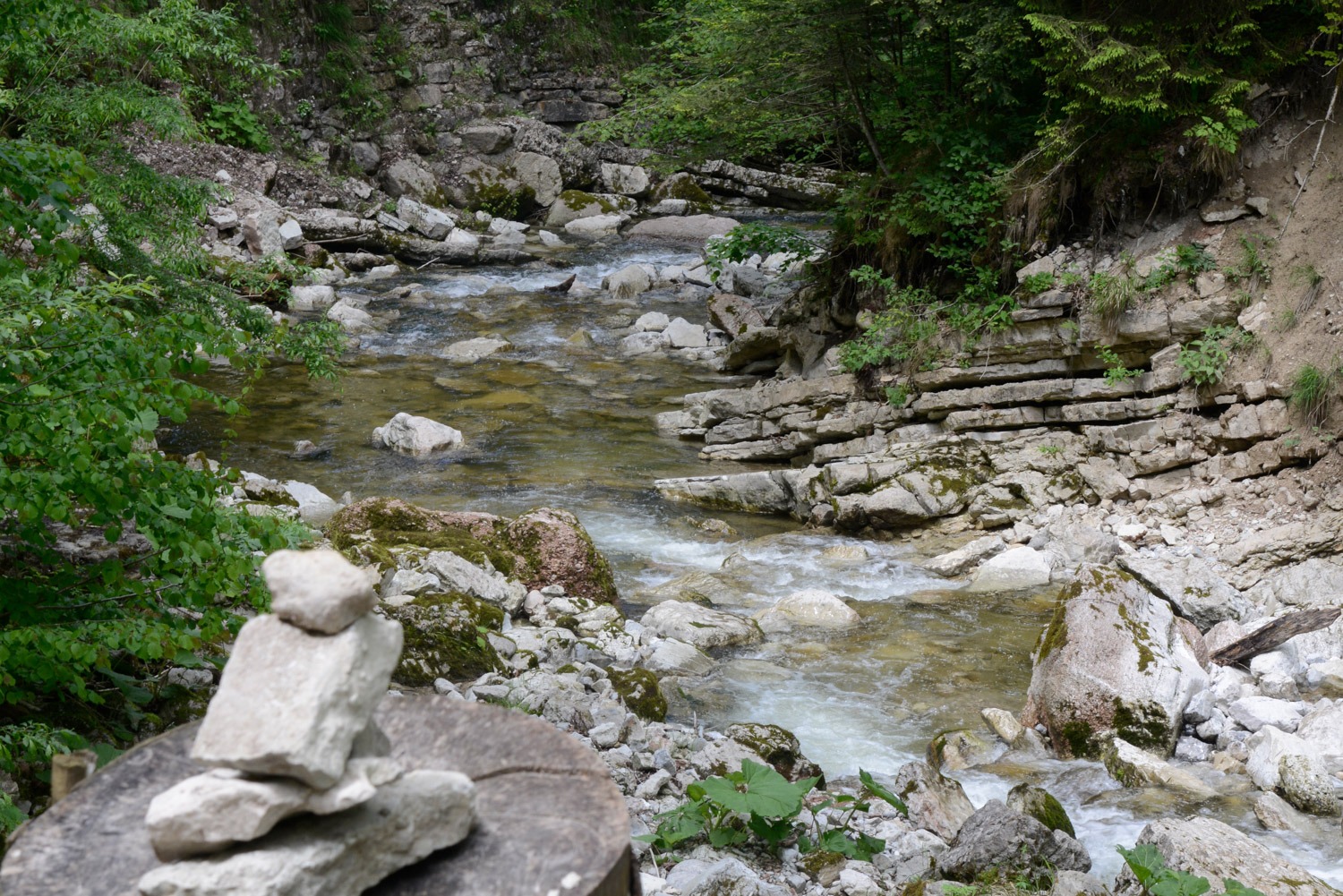
Strictly speaking, the Glasenbachklamm is not actually a gorge, but rather a V-shaped valley carved out by what is now the Klausbach after the last Ice Age. The stream gradually cut its way into the bedrock, revealing some 250 million years of Earth’s history.
In 1987, the Glasenbach Gorge was designated a protected landscape area due to its particularly beautiful rock formations, its abundance of fossils, and its rich vegetation. In 1965, the first nature trail was established through the gorge, which is approximately 3 km long.
At the Pulvermacher Museum, you’ll find an extensive exhibition on the fossils from the Glasenbach Gorge, a replica of the so-called Elsbethen „Gypsy Cave,“ and interesting facts about gunpowder manufacturing, which was carried out in Elsbethen until the 19th century.
The Klausbach
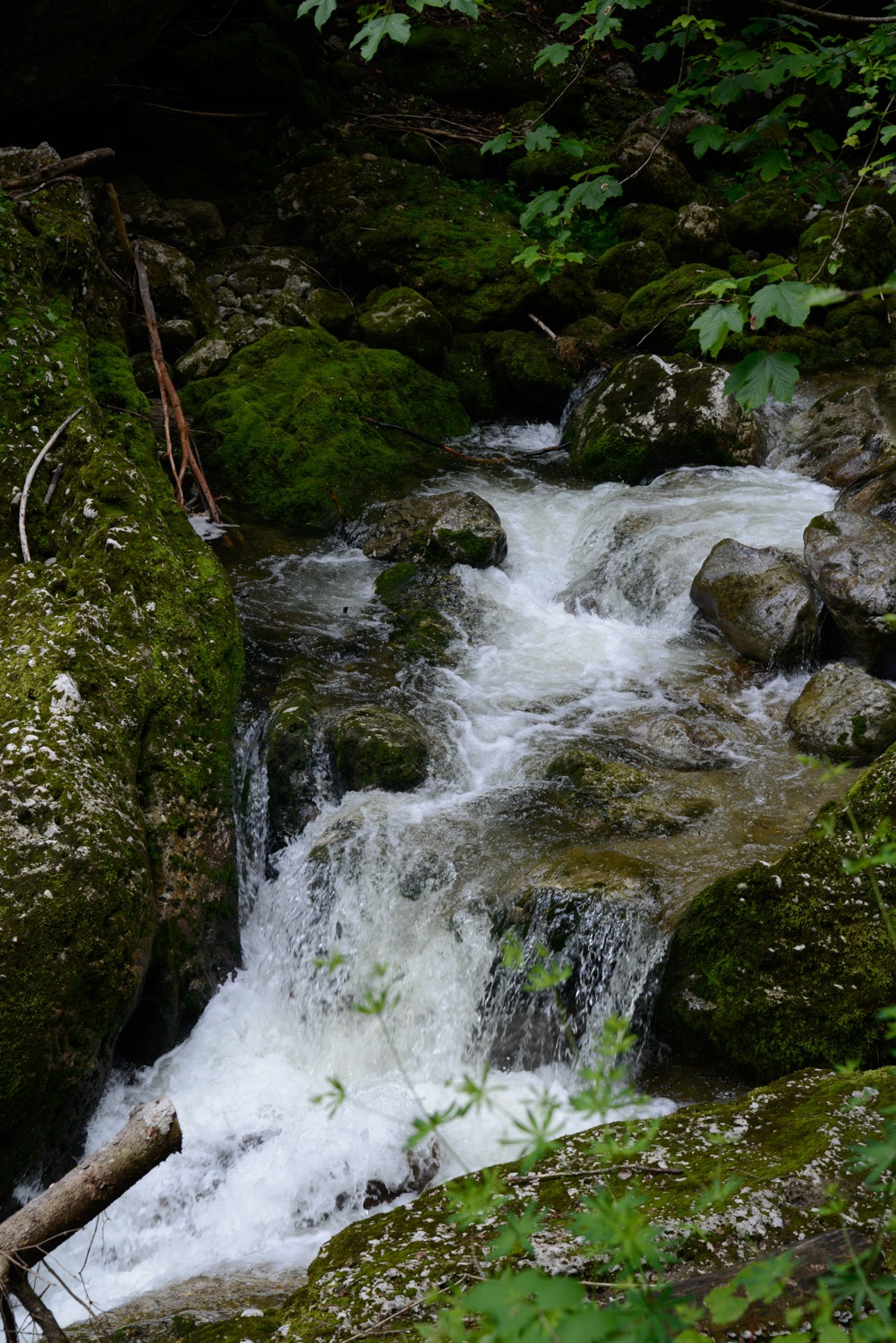
The Klausbach drains the Egelseen raised bog and flows into the Salzach after about 7 km. The stream was originally called „Glasbach,“ named after the Glas district of Elsbethn. Over time, as it came to be used for log driving, it was renamed „Klausbach.“ Klausen are weirs that dam up the stream. Logs are placed in the dammed-up water and, once the weir is opened, are carried downstream by the current. The logs were caught in the area of what is now the Rechenwirt using a wooden rake and then transported further by horse-drawn carts. Most of the wood was taken to the salt works in Hallein, where it was used to fuel the boiling pans.
Until 1954, the Klausbach was also used to generate power. The first mill on the Klausbach was the so-called Höllmühle, built around the year 1300. At that time, the term “Hölle” referred to narrow, dark gorges. A ball mill built in 1792 produced about 40,000 balls annually, which were used as ballast for shipping. Starting in the 16th century, an industrial canal—the so-called Pulvermühlbach—was diverted from the Klausbach. Its water power fueled a grain mill, a blacksmith’s shop for horseshoes and weapons, a sawmill, and six powder mills. The mill canal was discharged back into the Klausbach in front of the Rechenwirt.
The Geology of the Gorge
The Glasenbach Gorge is part of the Osterhorn Group, which also includes, for example, the Gaisberg. It is thus still part of the Kalkalpen; to the north, it borders the gentle hills of the flysch zone. The rocks found in the gorge are sedimentary and reworked rocks. This means they were deposited in lakes and seas over millions of years and subsequently repositioned by continental drift, erosion, or, for example, underwater earthquakes. As a result, a wide variety of rock layers lie side by side and on top of one another in the Glasenbach Gorge. Geology seeks to explain the formation of our present-day landscape by observing the dynamics of how landscapes form today and thereby drawing conclusions about events that occurred in the past.
The geological nature trail provides information about the rocks found along the hiking trail. To complement this, a geological nature guide has been published and is available for purchase at the Elsbethen Local History Museum.
People and the Gorge
Humans have been making use of the gorge and its natural resources since ancient times. In the so-called „Gypsy Cave,“ which was inhabited by Stone Age people, arrowheads, knife blades, chisels, and scrapers made of radiolarite have been found. Radiolarite is a very hard, brittle rock found in the gorge.
The Lettenbach gets its name from the whitish, murky water (the „Letten“) that flows through it. The turbidity comes from the marl through which the stream is gradually cutting its way. Marl is a loamy rock consisting of clay and limestone. In the past, it was used, for example, in stove construction.
For a long time, the Glasenbach Gorge was also the main route connecting Elsbethen with the villages of Schwaitl, Hinterwinkel, and Ebenau. Today’s Schwaitl State Road was originally built in 1959 as a farm road and later upgraded to a state road. Therefore, if one wanted to go down into the valley, one used the road through the gorge. This was particularly difficult in winter, or sometimes even impossible—namely, when a flood had washed away one of the many bridges.
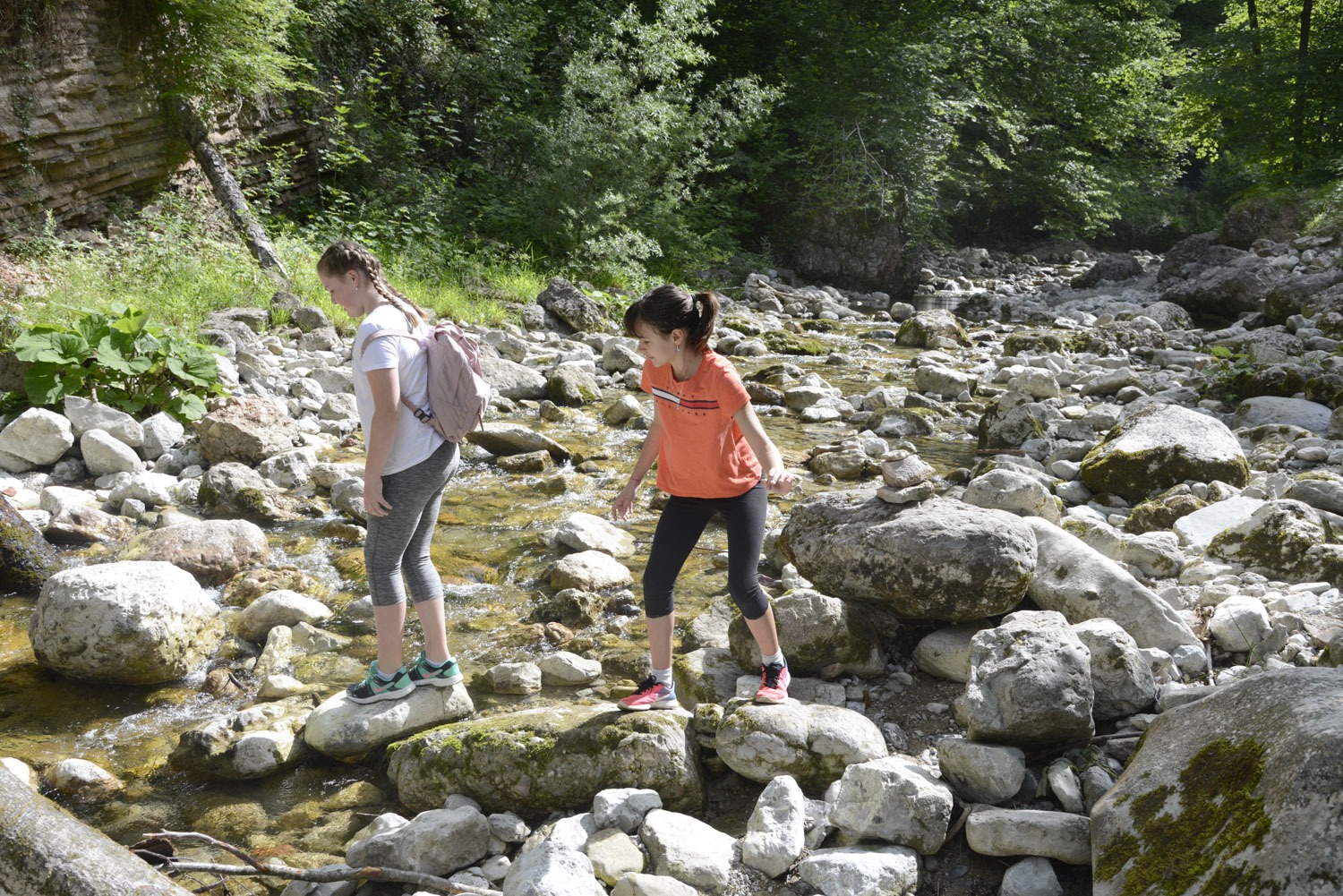
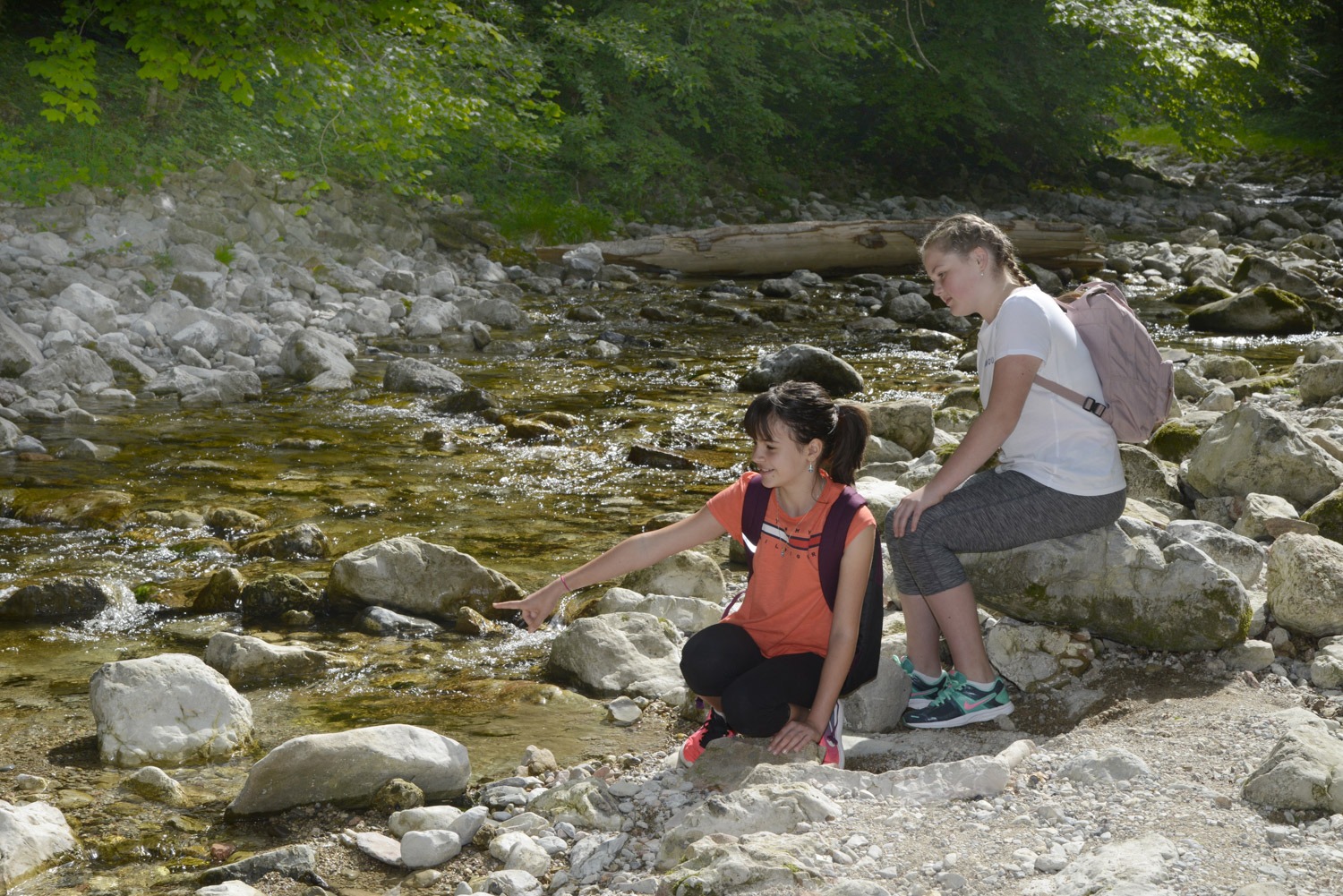
Today, the Glasenbach Gorge is a popular recreational spot for swimmers, walkers, and hikers.
The Plants in the Gorge
The gorge is home to very unique conditions for its flora and fauna: due to the high walls and its east-to-west orientation, relatively little sunlight reaches the gorge throughout the year. Added to this is the high humidity, which is also caused by the Klausbach stream. Under such conditions, so-called hillside and ravine forests develop, featuring typical tree species such as sycamore maple, Norway maple, ash, alder, and mountain elm. At the base of the slope, the very dense vegetation is striking, indicating a good supply of nutrients. Plants typical of such sites include stinging nettles, burdocks, blackberries, thistles, and impatiens. About one-third of the ferns found in Austria can also be found in the gorge. They inhabit rock crevices, trees, or the ground. One example of a protected fern species is the hart’s-tongue fern.
There is also a very special plant to be found in the gorge: the wolf’s monkshood. Its actual name is „yellow monkshood“ because its flowers are yellow. It is one of the most poisonous plants found in Austria. In the past, a decoction was made from its root, used to soak meat bait, and this was then used to kill wolves.
The Animal Inhabitants of the Gorge
The Glasenbach Gorge offers a variety of habitats for wildlife: birds, mammals, fish, and a wide variety of insects thrive here. While walking, you can spot the dipper diving into the water and searching under rocks for insect larvae. In the stream, you can also spot brown trout standing in the eddies, resting. Flying just above the water, the yellow-colored grey wagtail darts through the stream bed. If it’s still very damp in the morning, you can also spot the fire salamander here and there, leisurely making its way along, while in the forest above, roe deer or sometimes even a chamois can be seen. Foxes, martens, and badgers are particularly active at night.
 German
  English